
This guide is for yard managers, workshop supervisors and equipment owners who use trolleys, carts and machines outdoors. Small hard wheels that work well inside a building often fail on rough ground. Here is how to choose a wheel that lasts and keeps your equipment moving.
Why ordinary casters fail outside
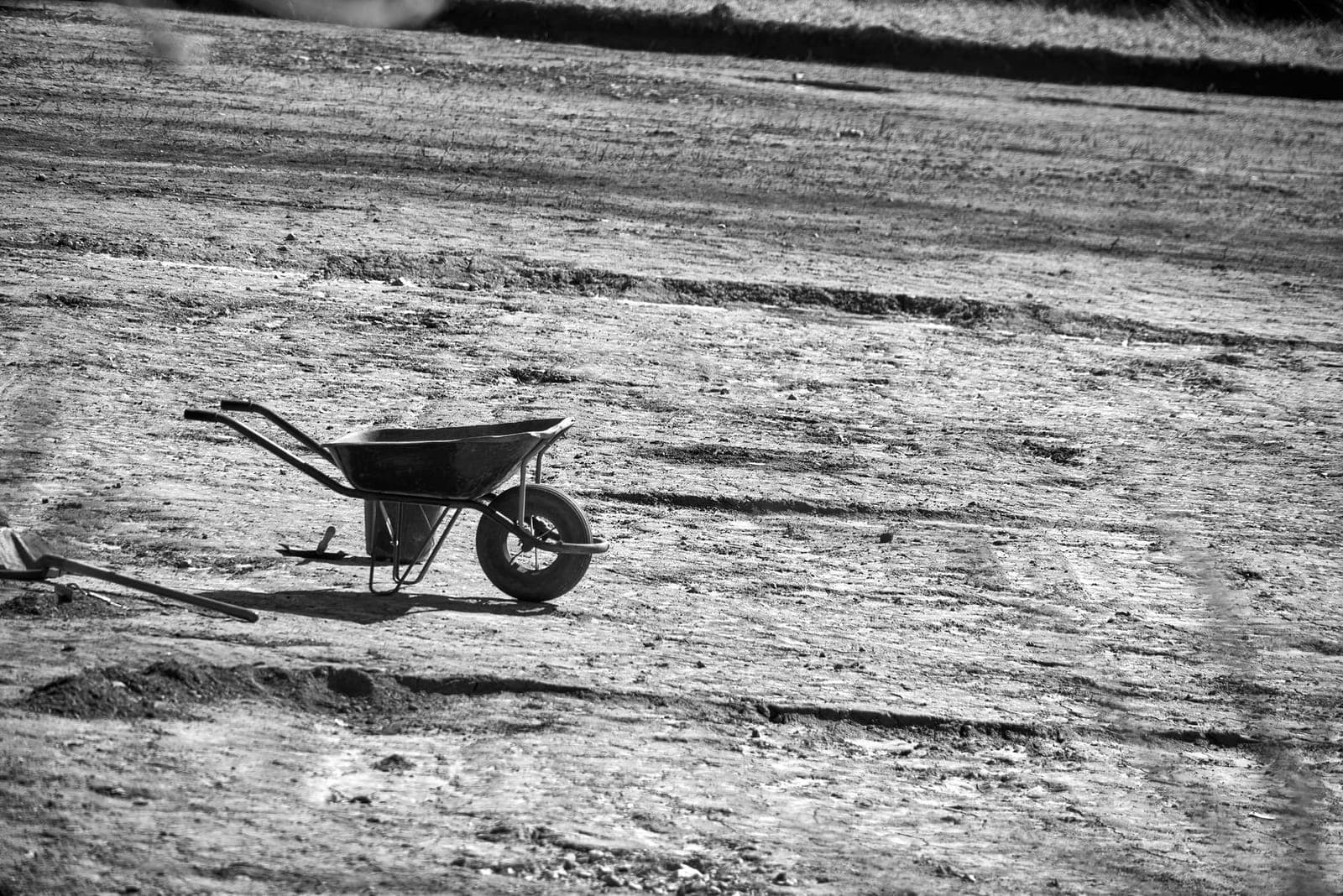
Indoor casters are made for flat floors. Outside, the ground has stones, cracks, dust, sand and kerbs. A small hard wheel hits each bump with its full load, and the shock goes into the wheel, the bearing and the bracket.
The result is cracked wheels, bent brackets and stuck swivels. You replace parts often and equipment stops. A wheel that fits the ground can mean fewer repeat orders and less downtime.
Think about the ground and the route
Walk the route your equipment will take. Write down what you see.
- Is the ground sand, gravel, packed earth or broken concrete?
- Are there kerbs, steps, drain covers or cables to cross?
- Is the route sloped?
- Does the equipment sit in sun, dust or water?
- How far does it travel each day?
A soft surface lets a narrow wheel sink. A wide wheel spreads the load. A larger wheel rolls over gaps better than a small one.
Air-filled wheels for rough ground
A pneumatic wheel is air-filled. Tell us your ground and load, and we will confirm if it fits.
In our catalogue, the pneumatic series is the HOD G3 series, rated 160 to 220 kg, with double bearings. It is listed as a swivel top plate caster and a rigid top plate caster. The series does not list a braked model, so if you need a brake, tell us and we will check what we can offer.
Air can leak, so check wheel pressure and condition as part of your routine. Tell us if the equipment will stand for long periods, as that affects the choice.
Foam wheels when you want no air
The foam series has foaming wheels with no air to lose. Tell us your ground and we will confirm if it fits.
The foam series is the HOD E3 series, rated 160 to 260 kg, with double bearings. It is listed as swivel, swivel with brake, and rigid top plate casters. It is listed with a brake version, unlike the pneumatic series.
Tell us about sharp objects, heat or chemicals on site, and we will confirm the right series.
Brakes and safety on slopes
Outdoor ground is rarely level. A trolley can roll on a small slope, and a loaded one is hard to stop. A brake on at least two casters keeps it from rolling while staff load or unload.
On a steep slope, follow the equipment maker's instructions and your site safety rules. For mobile scaffold towers on site, look at the scaffold caster series, which is listed with brakes.
Plan for wear and upkeep
Outdoor work is hard on every part of a caster. Sun, dust and water can all wear a wheel and a bearing. Tell us how the equipment is stored, for example under a roof or in the open, so we can take it into account.
Outdoor casters work harder and need checks. Clean dirt and sand from the wheel and swivel often. Look for cracks, flat spots, loose fixings and wheels that no longer turn freely.
Replace worn parts in sets, so the equipment rolls evenly. Keep a record of the codes you use, so your next order is easier to check.
What to send us for a quote
Send us this information so we can confirm the right series:
- the equipment, and the heaviest load it carries;
- the number of casters and how they are fitted;
- a photo of the old caster, or its code;
- the ground: sand, gravel, earth, concrete or mixed;
- any slopes, kerbs or steps on the route;
- whether you need a brake, and the quantity.
Request a quote on our website or message us on WhatsApp, and we will confirm the right series.