
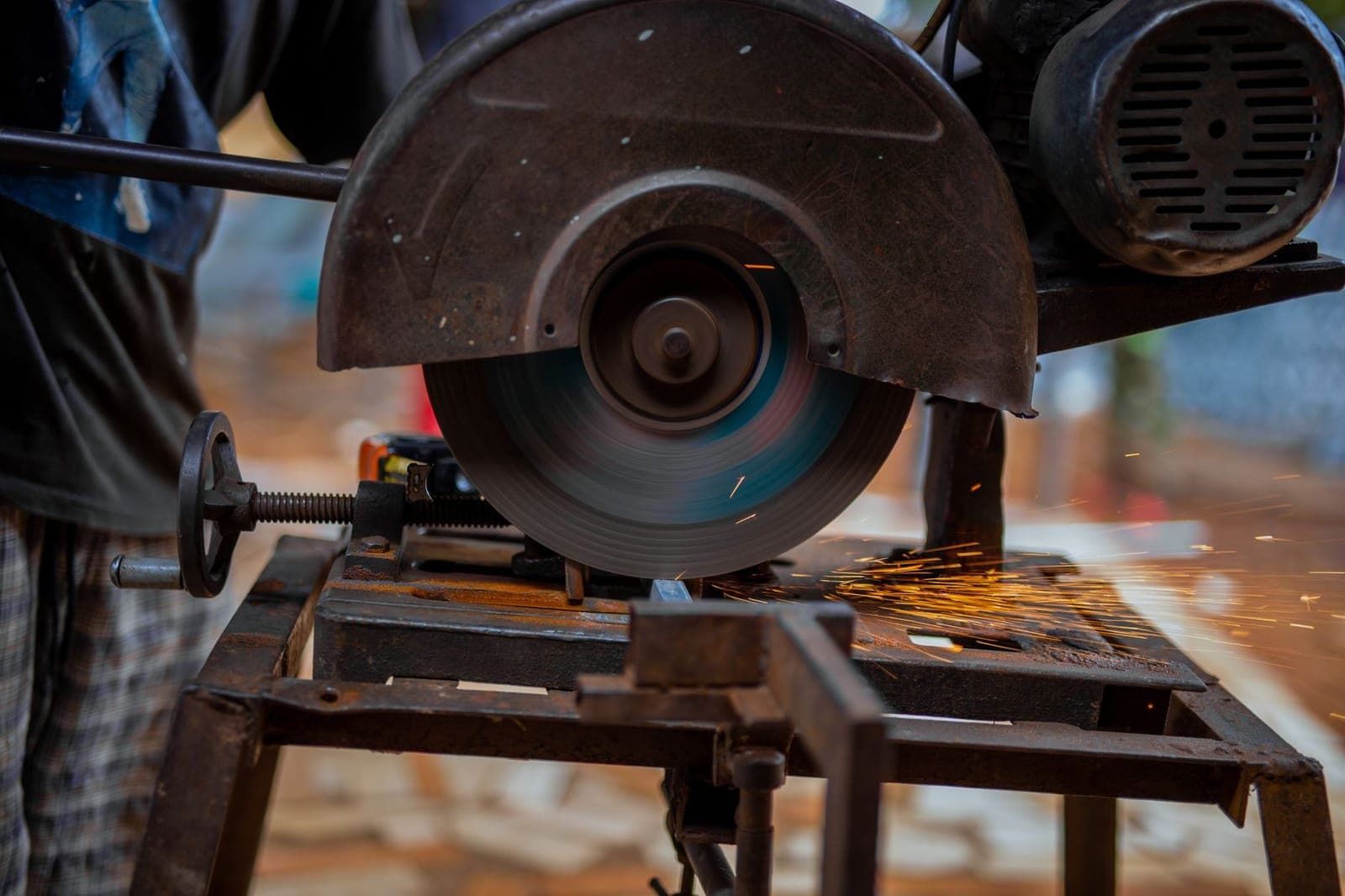
This guide is for buyers and workshop supervisors who must choose between an HSS blade and a TCT blade. We supply both from Kinkelder. Here is how our catalogue describes each line, so you can brief us properly and avoid a wrong order.
What HSS and TCT mean
HSS means high-speed steel. TCT means tungsten carbide tipped. Both are saw blades for cutting metal, but our catalogue sorts them into different lines.
The HSS line is called KINS' GREEN. The TCT blades sit in three lines, each named for the job it is listed for:
- KINS' ORANGE: TCT blades for flying cut-off on tube mills.
- KINS' BLUE: TCT blades for cutting tubes, pipes and profiles on stationary and semi-automatic machines.
- KINS' RED: TCT blades for solid steel bars and other dense metals, on stationary saws.
So the first step is not HSS or TCT. It is what you cut and on which machine.
What the catalogue says about KINS' GREEN
Our catalogue says KINS' GREEN blades are made from high-speed steel. They are typically used for low-tensile and sub-range medium-tensile applications, with lower cutting speeds and wall thicknesses.
The catalogue also says HSS blades resist the heat made during cutting. It links this to longer blade life and less downtime for blade changes. It lists HSS blades for steel bars, tubes, pipes and other steel products.
The line has six versions: Performance, Stainless Performance, Stainless Stabilizer, Stabilizer, Universal and Vapor. Each version has its own rating rows on the line page. Read them side by side before you ask for a quote.
What the catalogue says about the TCT lines
The catalogue describes KINS' RED as TCT blades for solid steel bars and other dense metal materials. It comes in LF, MT, LT Performance, MT Performance and HT versions, plus two stainless versions: Stainless Small and Stainless Large.
KINS' BLUE and KINS' ORANGE are the TCT lines for tube, pipe and profile. The catalogue lists KINS' ORANGE for flying cut-off. In that job the saw cuts hollow sections, square tubes and rectangular tubes without stopping or slowing the line.
The catalogue does not rank HSS against TCT. Tell us your machine and material instead.
Compare the two, and when to ask us
Use the same checklist for any blade you consider. The line pages show ratings for most of these points.
- Tensile strength: the pages rate blades for low, medium and high tensile steel, depending on the line.
- Stainless steel: the HSS line and all three TCT lines list stainless versions, rated separately.
- Blade life and cutting speed: KINS' GREEN pages rate both. KINS' RED pages rate blade life.
- Shape of the work: tube, thin tube, profile or solid bar. The lines are split by this.
- Machine type: stationary saw, semi-automatic saw or tube mill.
The ratings help you shortlist. They do not replace a check of your own job. Ask us first in these cases:
- You cut both solid bar and tube on one saw.
- You cut stainless steel as well as carbon steel.
- The machine is new to you, or the old blade has no code.
- You are changing from one line to another, for example from HSS to TCT.
A line change is not a like-for-like swap. The size and specification of a blade depend on the machine, the cutting task and the material. Tell us the details and we will confirm the right line and version. You can also browse the full saw blade range.
What to send us for a quote
- The machine make and model, and the blade size it takes.
- What you cut: solid bar, tube, pipe or profile, with the size and wall thickness.
- The steel grade and whether it is low, medium or high tensile. Say if it is stainless.
- The old blade's code, or its diameter, bore, thickness and fixing holes, with a photo.
- What is wrong with the current blade: short life, rough cuts or burrs.
- The quantity you need.
Request a quote on our website or message us on WhatsApp, and we will confirm the right line for your job.