
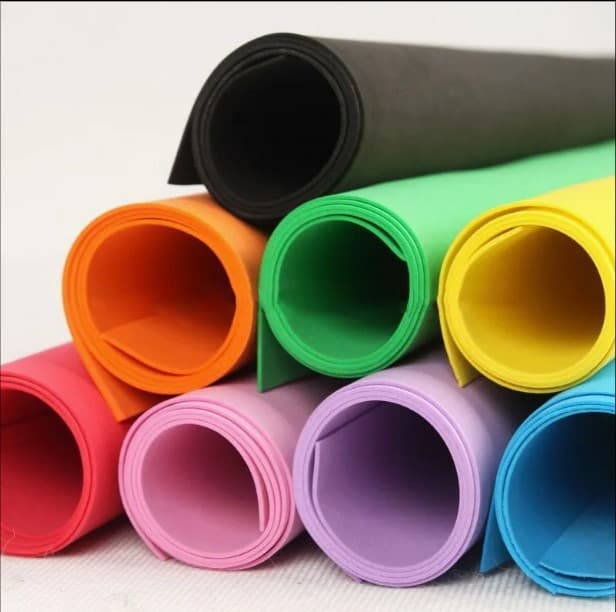
This guide is for maintenance managers, workshop supervisors and buyers who need rubber sheet for floors, linings and protection. It helps you decide which type to ask for and what to tell us. A wrong choice can mean early replacement, and then you pay for the job twice.
Say what the sheet must do
Start with the job, not the rubber. Our catalogue lists rubber sheet for flooring, lining, sealing and protection. Write down which of these is yours, and keep the list with your order notes:
- Workshop floor: foot traffic, trolleys, dropped tools, oil and cleaning fluids.
- Lining: a steel or concrete surface that material falls on or slides along.
- Protection: pads and covers for a surface, an edge or a machine part.
- Sealing: a joint or gap that needs closing.
If your job is not on this list, tell us the job and we will confirm the sheet. Do not guess the sheet from a photo of the old one. A sample or a marked offcut helps us more.
General-purpose sheet for mats, pads and lining
Our catalogue lists NR / SBR sheet for mats, pads, lining and protection. It is described as general-purpose natural and synthetic rubber sheet.
If oil or chemicals will touch the sheet often, tell us. We will confirm the right material for the conditions. The name of a sheet does not tell you enough on its own.
When oil, weather or wear matter
Some sites put more on the sheet than a dry floor does. Think about the real conditions before you order.
Our catalogue lists neoprene sheet with good weather, oil and abrasion resistance for industrial use. We list nitrile sheet as oil-resistant NBR for workshops, gaskets, pads and fuel-related environments. We confirm the type against your conditions, not from the name alone.
Tell us about each of these:
- Oil in the workshop: which oils, fuels or fluids touch the sheet.
- Sun and weather: whether the sheet is outdoors or under a roof.
- Wear: whether material slides across it or drops on it.
Look at the surface underneath
The surface under the sheet matters as much as the sheet. Note whether it is steel, concrete or another base. Note whether it is clean, flat and dry, or rough, damaged or wet.
Tell us about any curves, corners or steps in the area. Flat panels are simple. Shapes need more planning, and we would rather hear about them before you order than after.
Also tell us if your team will cut and fit the sheet. Send a sketch with the main measurements if you can. It helps us understand the job, and it helps you check that you have not missed an area.
Measure and plan the fitting
A sheet that does not fit the space causes gaps and lifted edges. Before you order, measure the area. Note how the sheet will be held in place, because a floor sheet may be loose-laid or fixed. Tell us which you plan.
Think about your staff as well. Tell us if people will walk on the sheet, and whether an edge could catch a trolley wheel. Tell us about heavy trolleys or casters that will roll on it, so we can check the sheet against the traffic.
Other rubber products in our range
We also list EPDM, nitrile and Viton sheet, rubber seals and gaskets. If your job is about sealing, fuels or chemicals, read the industrial materials range or ask us which sheet to look at.
We also list rubber coating for metal parts. Ask us if a coating fits your job better than a loose sheet.
What to send us for a quote
Send us this information, and we will confirm the right rubber sheet:
- The job: floor, lining, protection pad or sealing, and where the sheet goes.
- The size of each area, and the thickness you need, if you know it.
- What touches the sheet: oil, fuel, chemicals, water, sun or cleaning fluids.
- How it is loaded: foot traffic, trolleys, falling or sliding material.
- Whether people will walk on the sheet.
- Any drawing, sample or old sheet with its markings.
- The quantity you need.
If you need product documents, ask us when you quote. Request a quote or message us on WhatsApp.