
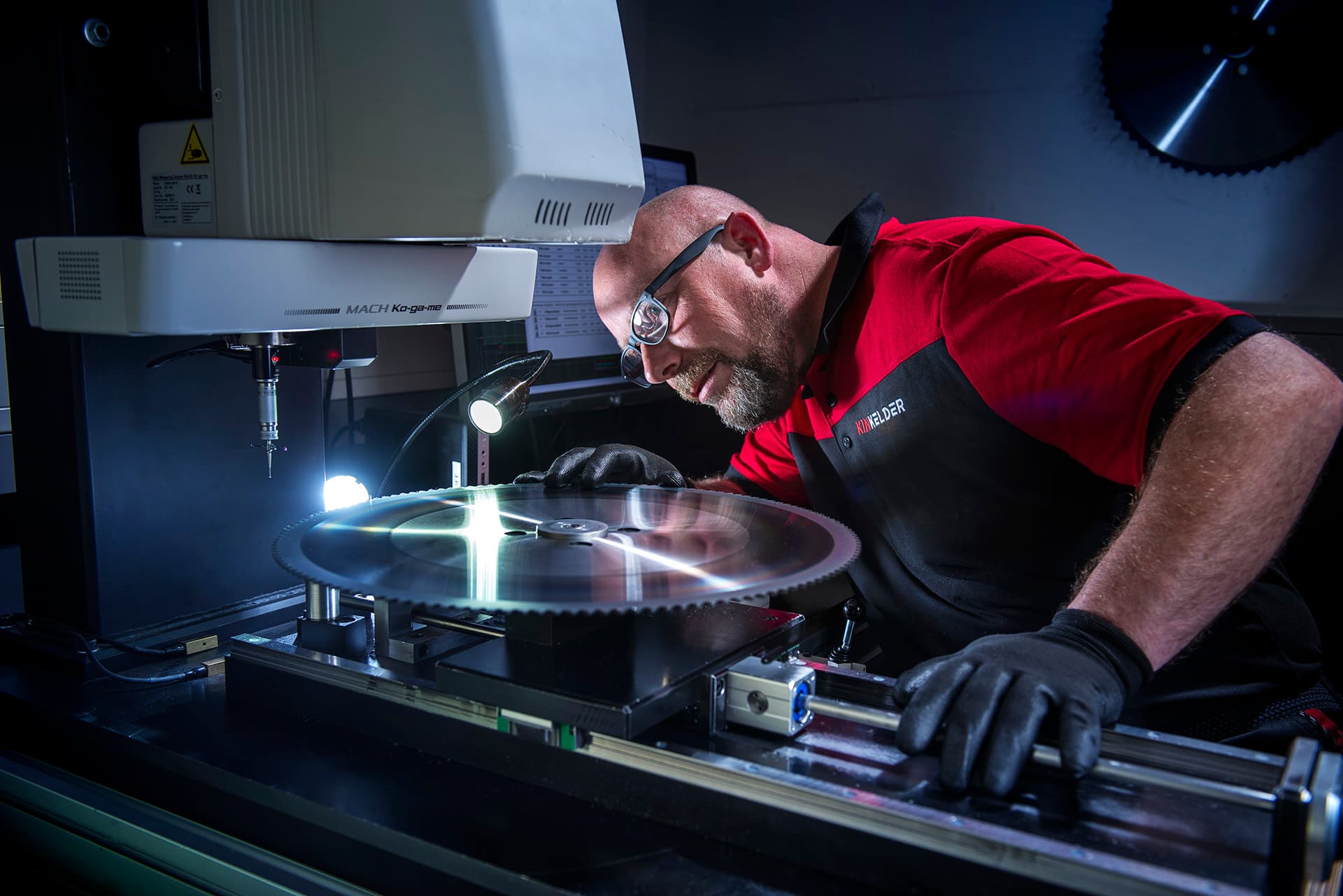
This guide is for workshop supervisors and production managers who cut steel tube, pipe or profile and get rough ends or burrs. Rough cuts mean extra finishing work, rejected pieces and a slower line. Use this checklist to find the cause before you order a new blade.
Check the blade first
We cannot promise a burr-free cut. The blade, the machine, the material and the settings all play a part, so check each in turn.
Look at the blade you are using now, with the machine stopped. Follow the machine maker's instructions and your site safety rules for removing it.
- Look at the teeth. Chipped, missing or worn teeth leave a rough cut.
- Look at the body. A bent or damaged blade does not cut straight.
- Look for material stuck to the teeth.
- Check how long it ran before the cut quality dropped. Write this down.
Take close photos of the teeth and of a few cut ends. Photos of a good cut and a bad cut side by side help us a lot.
Keep the old blade after you change it, because its size and bore help us confirm the right replacement.
Check the machine
A loose or worn machine can spoil a cut even with a good blade. Check these points against the maker's manual.
- Check that the tube is held firmly during the cut and does not move or vibrate.
- Check that the blade flanges are clean and undamaged, and that the blade is fitted correctly.
- Check that the feed is set as the machine maker says, and note if it changed recently.
- Check that coolant or lubricant reaches the cut, if your machine uses it.
- Check for play in the spindle or the clamps, and listen for a change in the machine's sound.
If something has changed on the machine, tell us. A new operator, a new setting or a repair can all change the cut.
Burnt or blue teeth point to a different problem. See saw blade overheating and discoloured teeth. For broken teeth, see chipping and broken teeth.
Check the material
Different tube needs different blades. Note the shape, the wall, the steel grade and whether it is stainless. Tell us if the tube changed lately: a new batch, a new grade or a new wall.
Tube, profile and solid bar are not the same job, so a blade that did well on one may not suit another. Tell us what you cut, not just what the machine is.
Keep a few uncut and cut samples of the same material when you can. They let us see the wall, the shape and the finish you are getting, and they make the conversation faster.
The lines to look at in our catalogue
We do not name a blade from a rough end alone. These are the lines we list for tube, and what the catalogue says about them. You can see them all on our Kinkelder saw blades page.
KINS' BLUE is listed for tubes, pipes or profiles on stationary and semi-automatic machines. Three of its four blades carry a Cut surface row in the catalogue: Stabilizer Performance 9, Performance 9 and Multi Performance 7. These scores compare blades on the BLUE page. They are not a promise about your cut.
KINS' ORANGE is listed for flying cut-off on tube mills, cutting without stopping the production line. If your rough ends come from a tube mill, tell us the mill and the tube.
If you use an HSS blade now, or think of moving to or from one, tell us first and we will confirm. Our KINS' GREEN HSS line is listed for low-tensile and sub-range medium-tensile applications.
What to send us for a quote
- A description of the problem: burrs, rough ends, bent ends or all of these.
- Close photos of the cut ends and of the teeth of the old blade.
- The blade size and any markings on it.
- The machine type and model, and whether it is a tube mill or a stationary saw.
- What you cut: shape, size, wall and steel grade.
- How long the blade ran before the cut got worse.
- Whether the tube, the machine or the settings changed recently.
- The quantity you need.
Request a quote on our website or message us on WhatsApp, and we will confirm which line to look at for your machine.