
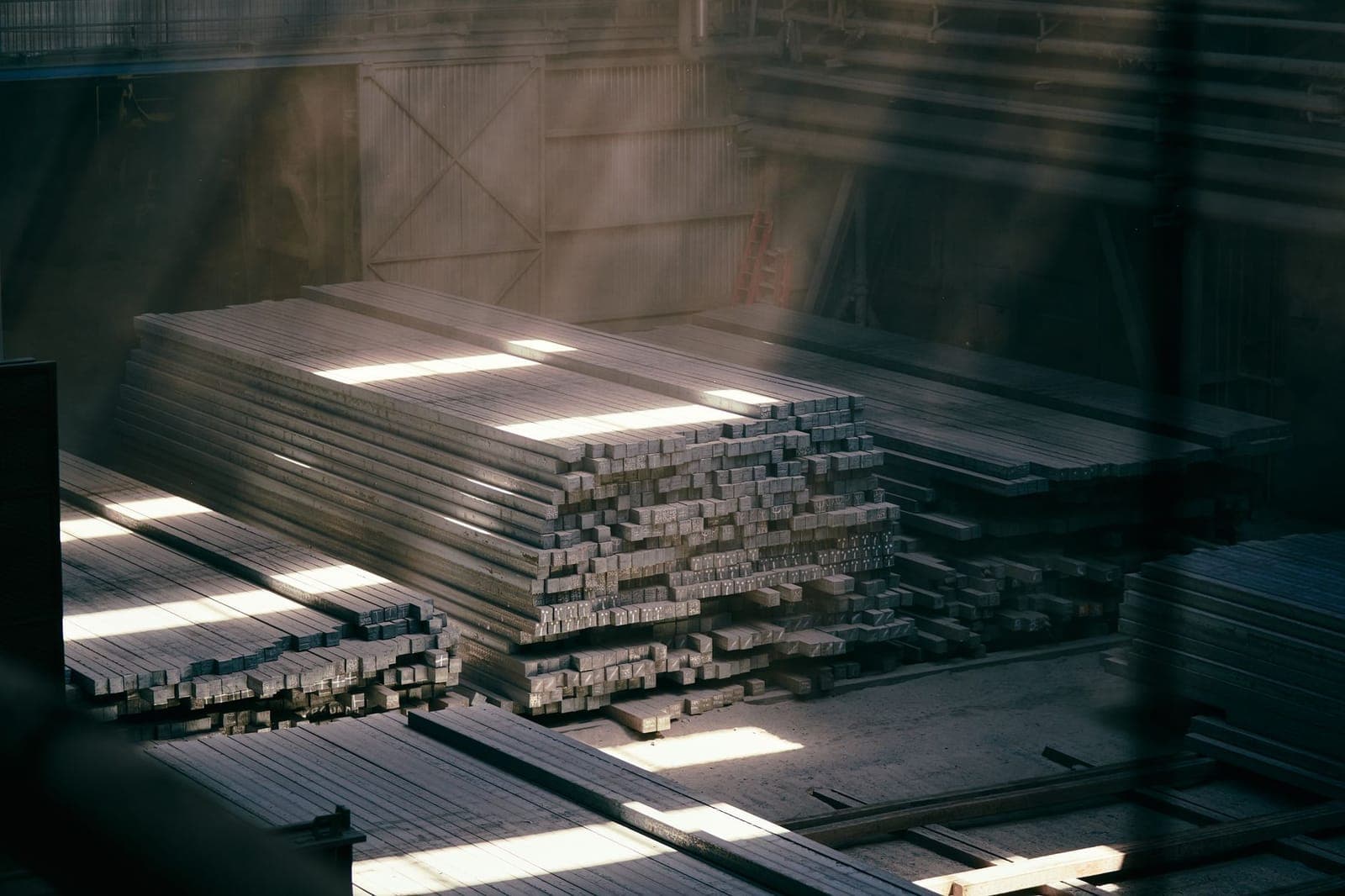
This guide is for steel service centres, stockholders and workshops that cut solid bar and billet every day. It explains the three blade types we supply from Kinkelder, and when each one fits. The right line helps you plan for fewer blade changes.
Know the bar before you choose the blade
Solid bar and tube need different blades. Before you look at any blade, write down what you cut.
- Steel grade: carbon steel, alloy steel or stainless steel.
- Tensile strength: low, medium or high. The product pages rate each blade against these.
- Bar size: the smallest and largest diameter or section you cut on the same saw.
- Saw: make, model, and the blade size it takes.
If you cut a mix of grades on one machine, tell us the mix, not just the most common job.
TCT blades for steel bar
TCT means tungsten carbide tipped. Kinkelder's KINS' RED range is made for cutting solid steel bars and other dense metals. The catalogue lists it as a TCT solid stationary line.
The range is split by steel type, so you can match the version to your stock:
- LF, LT Performance, MT and MT Performance, for low and medium tensile steel.
- HT, for high tensile steel and stainless steel.
- Stainless Small and Stainless Large, for stainless steel, split by blade diameter.
HSS blades for lower cutting speeds
HSS means high-speed steel. The KINS' GREEN range is made from European-quality HSS. It is typically used for low tensile and part of the medium tensile range, at lower cutting speeds and wall thicknesses. The HSS resists the heat made during cutting, which helps blade life and cuts the time lost to changing blades.
The range has several versions:
- Performance, Stabilizer and Universal, for low and medium tensile steel.
- Stainless Performance and Stainless Stabilizer, for stainless steel.
- Vapor, listed for low tensile steel.
Our catalogue lists HSS for low and medium tensile steel at lower cutting speeds. If you cut harder bar on a fast saw, ask us about TCT first.
Segmental blades you can repair
The KINS' YELLOW blade has a chrome vanadium steel body with HSS toothed segments riveted to the edge. If a tooth or segment is damaged, you replace that one segment, not the whole blade. Tell us if repair cost matters to your workshop.
The finder rates this blade very high for low tensile steel and for non-ferrous metal, and top for repairability. It is rated low for cutting speed. If you value a blade you can repair over one that cuts fast, ask us about it.
Compare the three and read your old blade
- Fast saw: tell us the speed, and we will say which line to start with.
- Low and medium tensile at lower speeds: look at HSS.
- Repairs instead of replacement: look at segmental.
- Stainless bar: the TCT and HSS lines have stainless versions. Tell us the grade, and we will confirm if segmental fits.
Do not choose on price alone. Count the cost per cut, including stops and scrap. See the whole Kinkelder saw blade range to compare the lines side by side.
Your old blade also tells you a lot. Look at it before you reorder, and send us what you see.
- Teeth chipping or breaking: the blade may not suit the steel grade or the bar section you cut.
- Short life on one grade only: you may need a different version for that grade, not a different line.
- Rough or slanted cut ends: check the blade, the clamping and the saw. Tell us all three.
- Stops for blade changes: ask us whether a longer-lasting or repairable blade fits your saw.
Tell us what goes wrong, and we will help find the cause. Follow your machine maker's rules for fitting and running the blade.
What to send us for a quote
- Saw make and model, and whether it is stationary or semi-automatic.
- Steel grade and tensile strength, including stainless if you cut it.
- Bar or billet shape and the size range you cut.
- The old blade's code, or its diameter, bore, thickness and fixing holes.
- What goes wrong now: short life, rough ends, broken teeth or slow cuts.
- Quantity and delivery location.
Request a quote or message us on WhatsApp, and we will confirm the right line and version for your saw.