
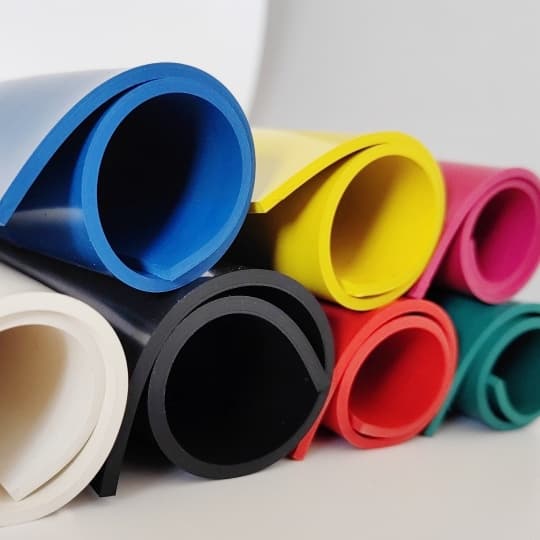
This guide is for buyers and maintenance teams who must choose between Viton and nitrile rubber sheet for a job with oil, fuel or chemicals. We will not rank one above the other, because the right sheet depends on the fluid and the job. Here is what our catalogue says about each, what decides the choice, and what to send us.
Nitrile sheet in our catalogue
Our catalogue describes nitrile rubber sheet as "oil-resistant NBR rubber sheet ideal for workshops, gaskets, pads, and fuel-related environments".
So the catalogue ties nitrile to oil and to fuel-related places, and it names gaskets and pads as uses. Read that wording as a starting point. It is not a promise for every oil or every fuel, so tell us which fluid you have.
Viton sheet in our catalogue
Our catalogue describes Viton rubber sheet as "high-performance rubber sheet for chemical, heat, and oil-resistant industrial applications".
The wording names three conditions: chemical, heat and oil. Nitrile is described with oil and fuel, and Viton with chemical, heat and oil. That is the difference on the page. It does not tell you which sheet your fluid needs, so tell us the fluid and the conditions.
Start with the fluid, not the material name
You may want to ask for a material by name because an old part, a drawing or a colleague used that name. A name is a good clue, but it is not the full answer. Start with what touches the sheet.
Tell us:
- The name of the fluid. Write "diesel", "hydraulic oil" or the chemical name, not just "oil" or "chemical".
- The brand and grade if you know them, or a product data sheet.
- Whether the fluid only splashes on the sheet or the sheet sits in it for long periods.
- Whether the fluid is hot, and where the heat comes from: the fluid, the machine or the weather.
- Whether more than one fluid or cleaning product touches the sheet.
A job with one plain fluid is easy to describe. A job where oil, fuel and a cleaning chemical all meet the same part needs more care, so list them all.
What the catalogue does not say
Our catalogue gives a short description for each sheet. It does not list a temperature range, a list of chemicals, a thickness or a hardness. Do not assume that a figure from elsewhere applies to our sheet. If a number matters for your job, ask us and we will confirm it.
Do not assume that a sheet chosen for one fluid is right for another. A sheet described for oil is not described for every chemical, and a sheet described for chemicals still needs your chemical to be named. Tell us what you have, and we will check.
If you need product documents for your quality or safety team, ask us.
What you are making
The shape and the use also matter, so say what the part is.
- A gasket between two faces.
- A pad or a mat under a machine or tank.
- A lining or a cover.
- A seal around an opening.
Thickness and size matter for each of these. Send the size you need and the thickness if you know it. If you have an old part, send it or a clear photo with a ruler beside it. Photos help us read the shape, the thickness and the signs of wear on the old part.
If the old part has hardened, cracked, swollen or gone soft, say so. If you are not sure which fluid caused it, say that too.
Our industrial materials page lists sheets, seals and gaskets in one place, if your job needs one of those instead.
What to send us for a quote
- Whether you want Viton, nitrile or both quoted, or you want us to confirm which one fits.
- The name of every fluid that touches the sheet, with brand or grade if known.
- How the fluid touches it: splash, drip or long contact.
- Whether heat is present, and where it comes from.
- What the part is: gasket, pad, lining, cover or other.
- The size and thickness you need, and the quantity.
- A photo or a sample of the old part, if you have one.
Request a quote on our website or message us on WhatsApp. Tell us your fluid, and we will confirm the right sheet for your job.