
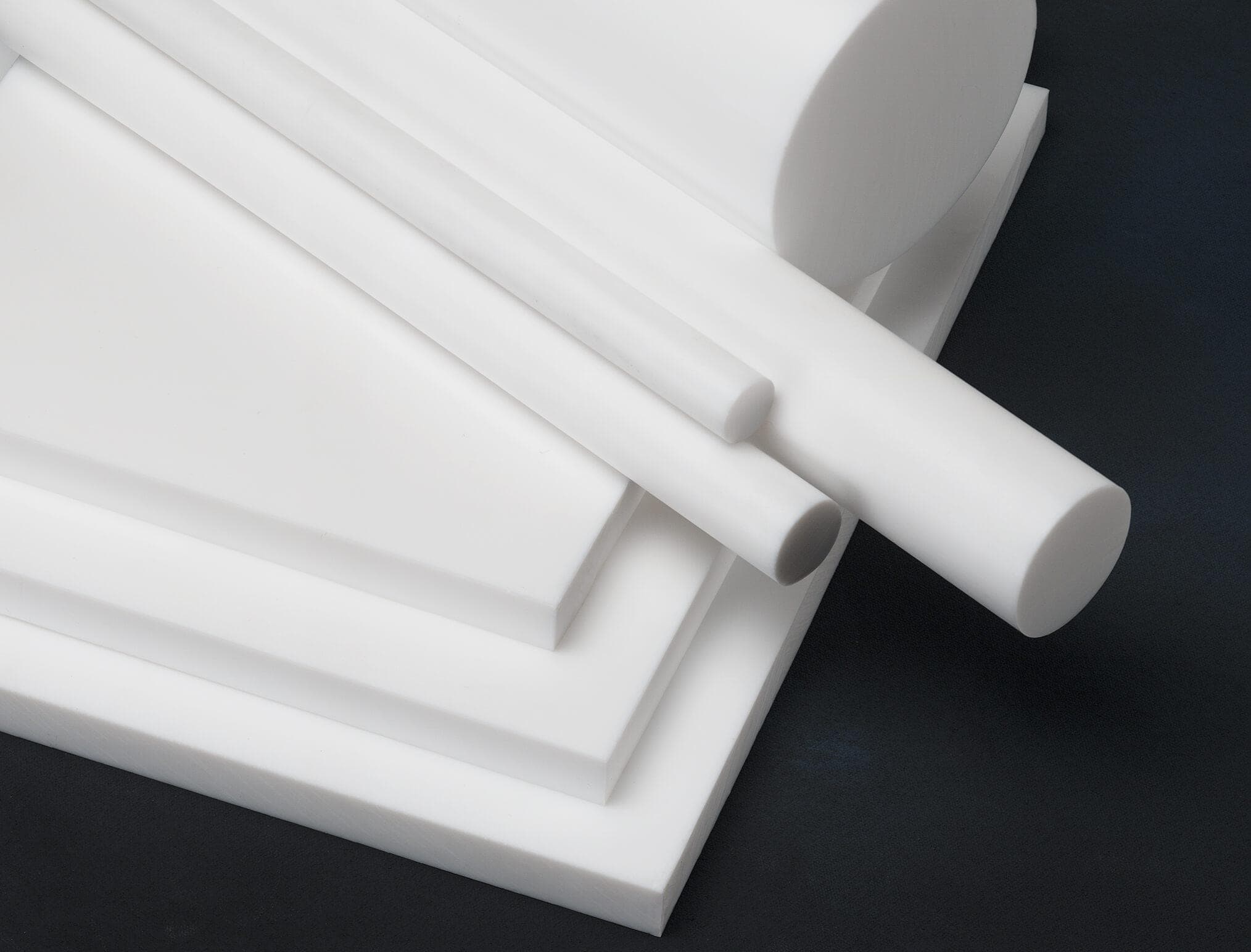
This guide is for maintenance managers, plant engineers and buyers who want to ask us about PTFE (Teflon) for a gasket or insulating part. Our catalogue lists PTFE as rod and sheet, and it does not name PTFE in the gasket entry. Here is how to ask, and what to send so we can confirm the material.
How our catalogue lists Teflon
Our catalogue lists Teflon as rod and sheet. It describes it as low-friction PTFE material for chemical resistance, insulation, guide parts and machine components.
That is the whole description. The catalogue gives no chemical table and no temperature range for this material, and we do not add any here. Your drawings may say PTFE or Teflon. Our entry uses both names, so use whichever you have. If your job depends on a chemical or a temperature, tell us the details and we will confirm.
If your quality team needs product documents, ask us when you request the quote.
PTFE as a gasket: ask us
Our catalogue lists gaskets as custom gasket materials for flange sealing, machinery, piping and industrial maintenance. The gasket entry does not name PTFE. So if you want a PTFE gasket, do not assume it is a standard item. Ask us.
Tell us what the gasket must seal and what it will touch. Our catalogue names flange sealing, machinery and piping as separate uses, so say which one yours is. Give us the shape and the size, or send the old gasket.
If chemical resistance is your reason for asking about PTFE, do not write "chemicals" alone. Name each chemical, its strength and the temperature it reaches. We will say what we can offer and what we still need.
If you are replacing a gasket, tell us what it is made of now and how it failed. A gasket that hardened, cracked or leaked tells us what the joint is doing. Keep the old one and send a photo. Our guide on how to measure a flange gasket shows which sizes to take.
PTFE as an insulating part
Our catalogue lists insulation among the uses of Teflon. The word covers more than one job, so be specific. Tell us what the part must separate or isolate, and why.
Tell us:
- What kind of insulation you need: electrical, heat or another kind
- What the part sits between, such as two metal parts or a part and a frame
- The shape and size of the part
- Whether it carries load or is clamped in place
- Whether it must also guide or slide against another part
The last two points matter because the catalogue also lists Teflon for guide parts and machine components. A part that insulates and also slides is a different request from a plain spacer.
We do not state any insulation value here, because the catalogue gives none. If the number matters to you, send us your requirement and we will confirm.
Rod or sheet
The catalogue lists both forms. A flat part and a round part may not start from the same form. Tell us the shape and size you need, and we will confirm whether to quote rod or sheet.
Send a drawing when you have one, with units on every dimension. A photo of the old part beside a ruler also helps. Tell us how many parts you need, and whether you have a spare, so we know what we are quoting.
You can browse the range on our industrial materials page. Weighing PTFE against nylon? Read our guide to nylon or PTFE (Teflon). Or tell us the job and we will confirm.
What to send us for a quote
Send us this information, and we will confirm the material:
- What the part is: a gasket, an insulating part or something else
- Where it goes in your machine or pipework
- The chemicals it touches, with name, strength and temperature if you know them
- The kind of insulation you need, if the part insulates
- A drawing, or the old part and a photo with a ruler beside it
- The size and the thickness, with units
- Rod or sheet, if you have a preference
- The quantity you need
Request a quote on our website or message us on WhatsApp, and we will confirm the right material for your part.