
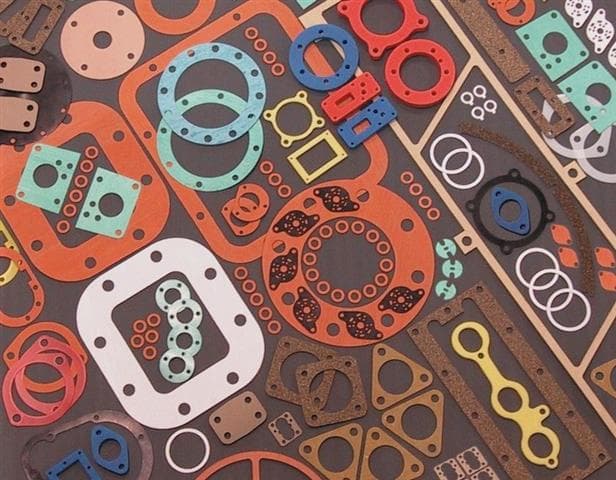
This guide is for maintenance planners and store managers who look after many machines and want spare gaskets and seals ready before a shutdown. It is a planning guide for a whole plant. It shows what to list and what to send us so we can confirm the materials.
Start with a list of joints, not a list of parts
A gasket or seal only makes sense next to the joint it serves. So build the list by machine and joint first, and only then by part.
For each machine, walk round it and note every place a gasket or seal sits:
- Pump casings and covers.
- Flanges on pipes and valves.
- Doors, hatches and inspection covers.
- Housings and machinery covers.
- Any other joint that you open during service.
Give each joint a short name that your team already uses. The store, the planner and the buyer will then read it the same way. That name will go on the sample, the photo and the quote.
A simple sheet works well. Give each joint one row, with these columns:
- The machine and the joint name.
- Seal or gasket.
- The size of the part, or the flange or housing it fits.
- The fluid and the conditions.
- Whether you hold an old sample.
Once the list exists, sort it. Group joints that share a size or a fluid, and mark the ones your shutdown will open. Mark the ones where a failed part would stop the line.
Keep the list on one sheet that you can send, and update it after each service. Next time you plan, the sample and the notes are already there.
Collect one sample for each joint
When a machine is opened for service, keep the removed part and label it with the machine, the joint and the date. Keep the part as it came off, and do not trim or cut it. One sample for each joint is enough to start. Our guide to matching a worn rubber seal has the full sample and photo advice.
For one pump, see gaskets for pumps and machinery covers. Those guides cover one part. This one is about many.
Note what each joint meets
Write down the fluids and conditions at each joint. This detail lets us confirm the material.
Tell us:
- The fluid: water, oil, fuel, a chemical (by product name), or air.
- Whether the joint is hot, outdoors or washed.
- Whether it is opened often or rarely.
- Anything unusual you have seen, such as a part that hardened early.
If the same fluid appears at many joints, say it once at the top of your list. You do not need to repeat it on every line. Where you are not sure of a fluid, write that down. A note that says "unknown" helps us more than a guess, and we will ask what else we need.
Seals and gaskets are two lists
Our catalogue lists rubber seals and gaskets as separate products. Keep them on separate sheets in your plan. Our guide to seals against gaskets explains the difference.
Where sheet fits in
Some gaskets are cut from sheet. Our catalogue lists nitrile as oil-resistant NBR sheet for workshops, gaskets, pads and fuel-related environments. If your plant has many oil or fuel joints, tell us, and we will confirm which sheet to quote. The industrial materials page lists every sheet in our catalogue.
We do not say that one sheet suits all your joints. The conditions at each joint decide it.
We do not give quantities here. The number of spares depends on your machines and your own records of what failed.
What to send us for a quote
- Your list of machines and joints, with the short names you use.
- One old gasket or seal for each joint, or a photo with a ruler beside it.
- The fluids and conditions at each joint.
- The size of each part, or the flange or housing it fits.
- Which parts are gaskets and which are seals.
- The quantity you want for each joint.
Send the list through our website or message us on WhatsApp, and we will confirm the materials joint by joint.